


Trump’s ‘total elimination’ strategy paved way for fall of cartel kingpin ‘El Mencho’
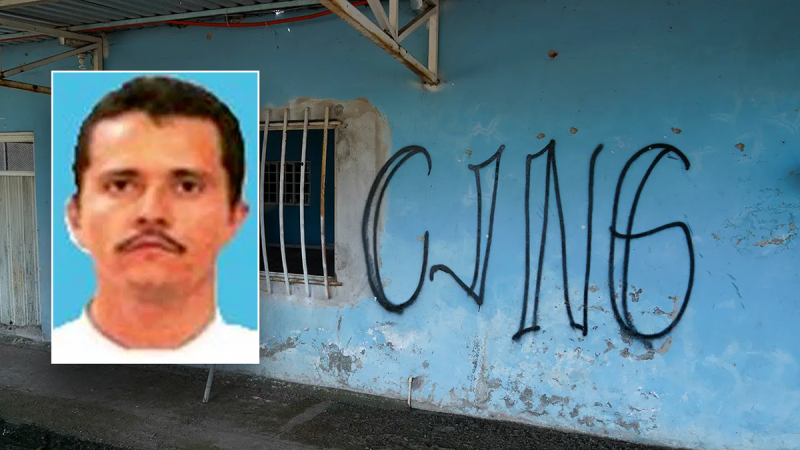
Government documents reveal the fall of drug kingpin ‘El Mencho’ over the weekend was the culmination of an aggressive, more than yearlong strategy of ‘total elimination’ pursued by the Trump administration against the ruthless Jalisco New Generation Cartel (CJNG), which is present in almost all 50 U.S. states.
Ruben ‘Nemesio’ Oseguera Cervantes, known as ‘El Mencho,’ the leader of the CJNG, was killed Sunday in a Mexican military operation in Tapalpa, Mexico, authorities said. Though the operation was carried out by Mexican forces, the United States laid the groundwork, making El Mencho’s fall possible.
On President Donald Trump’s first day in office, he signed an executive order directing the State Department to designate several cartels and international criminal groups ‘foreign terrorist organizations’ (FTOs), a designation unlocking military-grade surveillance and ‘material support’ prosecutions. Though lesser known than MS-13 or Tren de Aragua, CJNG was one of the groups designated an FTO by the administration.
Shortly after Trump’s executive order, on Feb. 5, Attorney General Pam Bondi sent a policy memorandum to all Department of Justice employees, announcing a ‘fundamental change in mindset and approach’ to cartels and transnational criminal organizations to a policy of ‘total elimination.’
Rather than simply seeking to mitigate the harms of cartel activity, Bondi said the DOJ would be suspending red tape to ’empower federal prosecutors throughout the country to work urgently with the Department of Homeland Security and other parts of the government toward the goal of eliminating these threats to U.S. sovereignty.’
The memo said the DOJ would be prioritizing cartel managers and leaders.
According to the Drug Enforcement Administration’s 2025 National Drug Threat Assessment, CJNG is one of the most ruthless cartels in Mexico and a key supplier of fentanyl to the U.S., making it ‘one of the most significant threats to the public health, public safety, and national security of the United States.’
The DEA said CJNG operates vast distribution networks within the U.S., with associates, facilitators and affiliates operating in ‘almost all 50 U.S. states.’ The DEA also said CJNG has been increasing its involvement in non-drug crime, including extortion, taxing human smuggling and fraud schemes.
A 2019 DOJ statement to the Senate Committee on Homeland Security and Governmental Affairs states that CJNG is ‘one of the most powerful and fastest growing cartels’ and operates key drug distribution hubs in Los Angeles, New York, Chicago and Atlanta. The Department of National Intelligence estimates the group has approximately 15,000–20,000 members.
Recognizing the threat posed by CJNG, the administration announced major results just over one month after Trump’s inauguration. On Feb. 27, Bondi announced the U.S. had secured the extradition of 29 high-ranking cartel leaders from Mexico, including top-tier CJNG leaders, a key money broker and a family member of El Mencho. Among those extradited and charged was Antonio Oseguera Cervantes, also known as ‘Tony Montana,’ El Mencho’s brother, who was charged in the District of Columbia for his alleged leadership role in the cartel.
On March 7, El Mencho’s son and heir apparent, Ruben Oseguera-Gonzalez, known as ‘El Menchito,’ was sentenced in Washington, D.C., to life in prison plus 30 years and ordered to forfeit $6 billion in drug proceeds. El Menchito had been extradited to the U.S. during the first Trump administration in 2020.
The next week, on March 15, the president again upped the ante against the cartels by designating fentanyl as a weapon of mass destruction, authorizing the use of advanced military assets for supply-side interdiction at the border. The move had a major impact on CJNG’s drug smuggling operations.
June was another high-impact month in the fight against CJNG. El Mencho’s brother-in-law, José González Valencia, ‘La Chepa,’ was sentenced to 30 years in federal prison. Another high-ranking leader, José González Valencia, co-founder of the CJNG’s financial wing ‘Los Cuinis,’ was also sentenced to 30 years.
The same month, the Treasury Department used the FEND Off Fentanyl Act for the first time to cut off three major Mexican banks, CIBanco, Intercam and Vector, from the U.S. dollar system for allegedly laundering CJNG funds.
In August, the administration secured the extradition of another 26 high-ranking cartel leaders from Mexico, including Abigael González Valencia, another brother-in-law of El Mencho known as ‘El Cuini,’ who was the head of a major money-laundering organization for the cartel.
Not letting up, the next month, the DEA and Department of Homeland Security launched a massive, nationwide weeklong operational surge targeting CJNG distribution networks. The effort led to 670 arrests and the seizure of $18 million in currency and $29 million in assets. The operation also resulted in the seizure of 92.4 kilograms of fentanyl powder and 1,157,672 counterfeit fentanyl pills.
Announcing the seizures, DEA Administrator Terrance Cole said the administration ‘is targeting the Jalisco New Generation Cartel as what it is—a terrorist organization—at every level, from its leadership to its distribution networks and everyone in between.’
‘Let this serve as a warning,’ said Cole at the time. ‘DEA will not relent … This focused operation is only the beginning — we will carry this fight forward together until this threat is defeated.’
By the end of 2025, the DEA was reporting that it had seized a total of 47 million fentanyl pills, enough to represent more than 369 million lethal doses, from cartel smugglers, including CJNG.
At the start of 2026, the administration again increased its targeting of CJNG and other cartels. The Department of War established the Joint Interagency Task Force-Counter Cartel (JIATF-CC) under U.S. Northern Command as the ‘next step’ in the whole-of-government approach to ‘identify, disrupt, and dismantle cartel operations posing a threat to the United States along the U.S.-Mexico border.’
On Feb. 19, just 72 hours before the Tapalpa raid, the Treasury sanctioned Kovay Gardens, a CJNG-controlled resort in Puerto Vallarta, cutting off a $300 million revenue stream flowing into the cartel’s coffers.
Following the raid, White House Press Secretary Karoline Leavitt confirmed the U.S. provided intelligence support to the Mexican government to assist in the operation.
Leavitt added that Trump ‘has been very clear the United States will ensure narcoterrorists … are forced to face the wrath of justice they have long deserved.’