




Deep Space Energy Secures US$1.1 Million to Advance Lunar Power and Satellite Resilience Goals
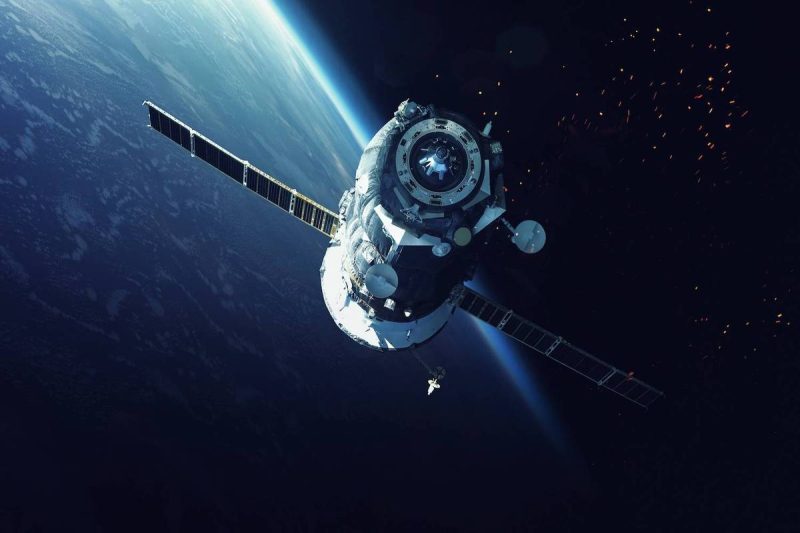
Latvian startup Deep Space Energy announced it has raised approximately US$1.1 million in a combination of private investment and public funding to advance a radioisotope-based power generator designed to operate on the Moon.
The company closed a US$416,500 pre-seed round led by Outlast Fund and angel investor Linas Sargautis, a former co-founder of NanoAvionics. It also secured an additional US$690,200 in public contracts and grants from the European Space Agency (ESA), NATO’s Defense Innovation Accelerator for the North Atlantic (DIANA), and the Latvian government.
Deep Space Energy is building a compact power system that uses radioisotopes, which are materials derived from nuclear waste that generate heat through natural decay, to produce electricity.
Founder and CEO Mihails Ščepanskis said the system converts that heat into electrical power while using significantly less fuel than conventional radioisotope thermoelectric generators (RTGs) currently deployed in space.
“Our technology, which has already been validated in the laboratory, has several applications across the defense and space sectors.
“First, we’re developing an auxiliary energy source to enhance the resilience of strategic satellites. It provides the redundancy of satellite power systems by supplying backup power that does not depend on solar energy, making it crucial for high-value military reconnaissance assets,” Ščepanskis said.
The company emphasized that the generator is not designed for weapons applications. Instead, it is targeting dual-use satellites operating in Medium Earth Orbit (MEO), Geostationary Orbit (GEO) and Highly Elliptical Orbit (HEO), all of which focus on communications, early warning systems, and reconnaissance capabilities.
These satellites support defense functions including synthetic aperture radar for detecting troop movements, signal intelligence systems, and missile-launch detection platforms.
According to Ščepanskis, recent geopolitical events have underscored their importance.
The war in Ukraine demonstrated the decisive role of satellite-based reconnaissance data. In 2025, Ukraine lost its beachhead in Russia’s Kursk Oblast during a period when the US temporarily halted the sharing of satellite intelligence.
“As Europe is trying to become more independent, it is imperative to produce satellites with advanced capabilities on our own. Our technology provides an auxiliary energy source for satellites, which makes them more resilient to non-kinetic attacks and malfunctions,” he added.
Beyond defense, Deep Space Energy is positioning its technology for lunar exploration. The company says its generator could support upcoming programmes such as NASA and ESA’s Artemis and Argonaut initiatives, as well as future lunar rover missions and the Moon Village framework.
On the Moon, temperatures can fall below minus 150 degrees Celsius during night cycles that last roughly 354 hours, making solar power unreliable.
Deep Space Energy estimates that about two kilograms of Americium-241 could generate 50 watts of power for a rover, compared with around 10 kilograms required by legacy RTG systems for similar output.
By reducing fuel requirements, the company argues it could extend rover lifetimes across multiple lunar day-night cycles, potentially lasting years.
Securities Disclosure: I, Giann Liguid, hold no direct investment interest in any company mentioned in this article.